
Home solar, sized to the way your house uses power
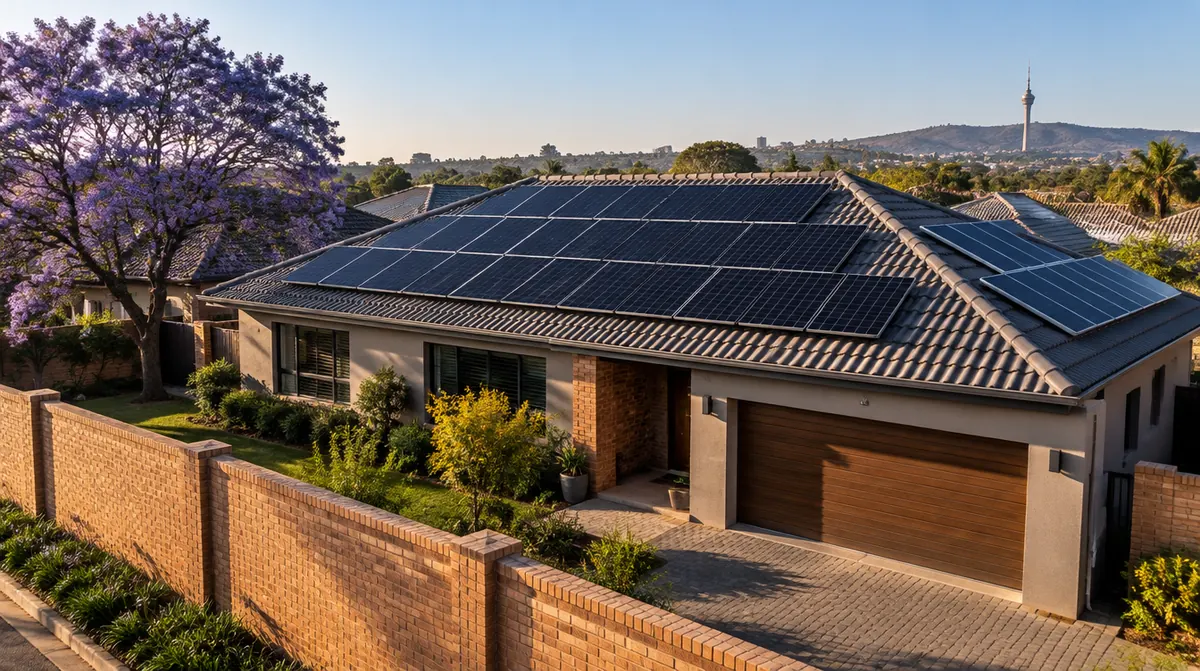
Most homes we quote want two things: the lights, Wi-Fi, fridge and TV kept on during power cuts, and a smaller electricity bill. A hybrid system does both. We size it from your actual loads, not from a package list.
Worth a call if
- You lose work or sleep to power cuts
- Your daytime use is high (home office, pool pump, borehole)
- You plan to stay in the house for several years
- Your roof gets sun for most of the day
Start with your loads, not a kit
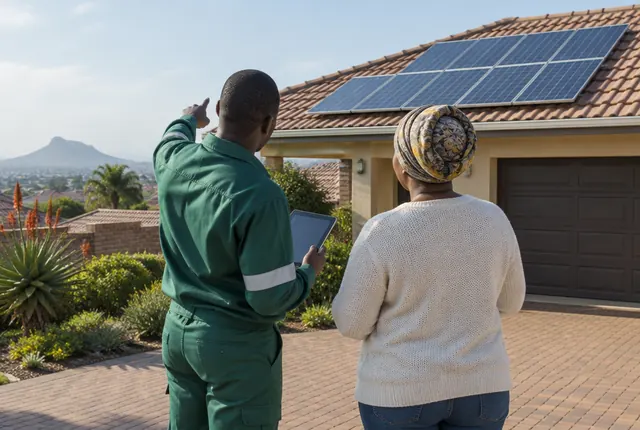
A family of four with a gas hob and a solar geyser needs a very different system from the same family with an electric stove, a pool pump and two home offices. On the site visit we list what must keep running in a power cut, what you would like solar to cover in the day, and what stays on the grid. That list sets the inverter size, the battery capacity and the panel count.
Where the panels go
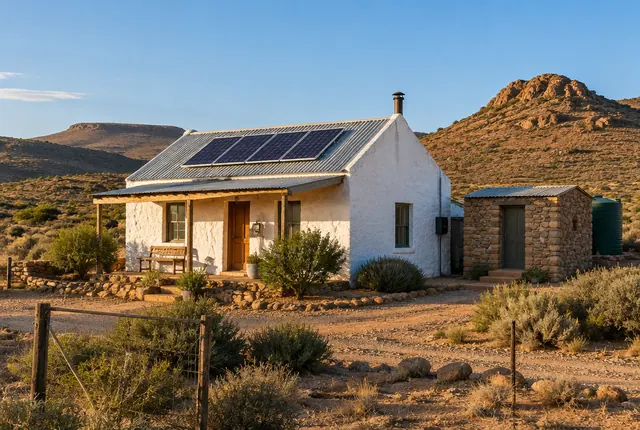
In South Africa, panels facing north produce the most over a year, and east or west roofs still work well, with output shifted to the morning or afternoon. We check roof type, condition, shading from trees and neighbours, and the route for the cables down to the inverter. Tiled, IBR, Klip-Lok and flat concrete roofs each take different mounting hardware.
Inverter and battery placement
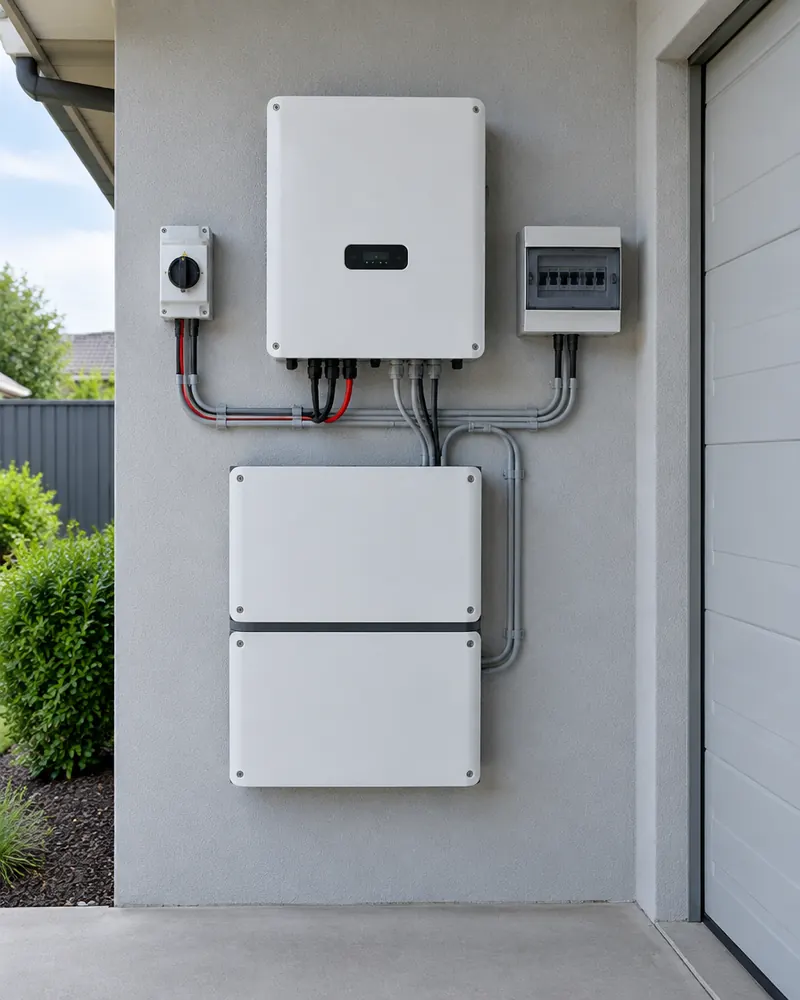
Inverters and lithium batteries like a cool, dry, ventilated spot close to the distribution board, usually a garage wall. We keep them out of direct sun, away from the geyser cupboard, and at a height you can read the display without a ladder.
Paperwork that comes with it
A grid-tied or hybrid system has to comply with the wiring code (SANS 10142-1) and needs an electrical Certificate of Compliance. If your municipality requires small-scale embedded generation (SSEG) registration, we prepare the documents with you. Requirements differ between municipalities, so we check yours before work starts.
What a typical home install includes
- 1
Site visit and load list
We walk the property, check the roof and DB board, and write down what must run on backup.
- 2
System design and written quote
Inverter, battery and panel sizes with the reasoning, plus a roof layout.
- 3
Mounting and panels
Rails and roof hooks suited to your roof, panels wired in strings and earthed.
- 4
Inverter, battery and protection
DC and AC isolators, surge protection, breakers and a split essential-loads circuit.
- 5
Commissioning and app set-up
We test every circuit, set battery limits and show you the monitoring app on your phone.
- 6
Certificate of Compliance
Issued on completion, with SSEG paperwork where your municipality asks for it.
More installation
Questions people ask us
Will a home solar system run my geyser?
It can, but a 3 kW geyser element drains a battery fast. Most homes do better with a solar geyser, a heat pump, or a timer that heats the geyser from the panels around midday. We put the geyser on the plan only when the numbers work.
Can I start small and add batteries or panels later?
Yes, if the inverter is chosen with room to grow. We note on the quote how many more panels and battery modules the inverter can take, so a later upgrade does not mean replacing it.
How long does an install take?
A typical home system takes one to two days on site once the equipment is in stock. Larger systems and roof repairs add time. The quote states the expected days.
Do I need permission from the municipality?
Many municipalities require SSEG registration for systems that connect to the grid, even if you never export power. We check your municipality’s rules and help with the forms.
Request a quote
Send the basics and we reply to arrange a site visit or a quote. A photo of your DB board and a recent electricity bill help us prepare, and you can attach them to the email this form opens.